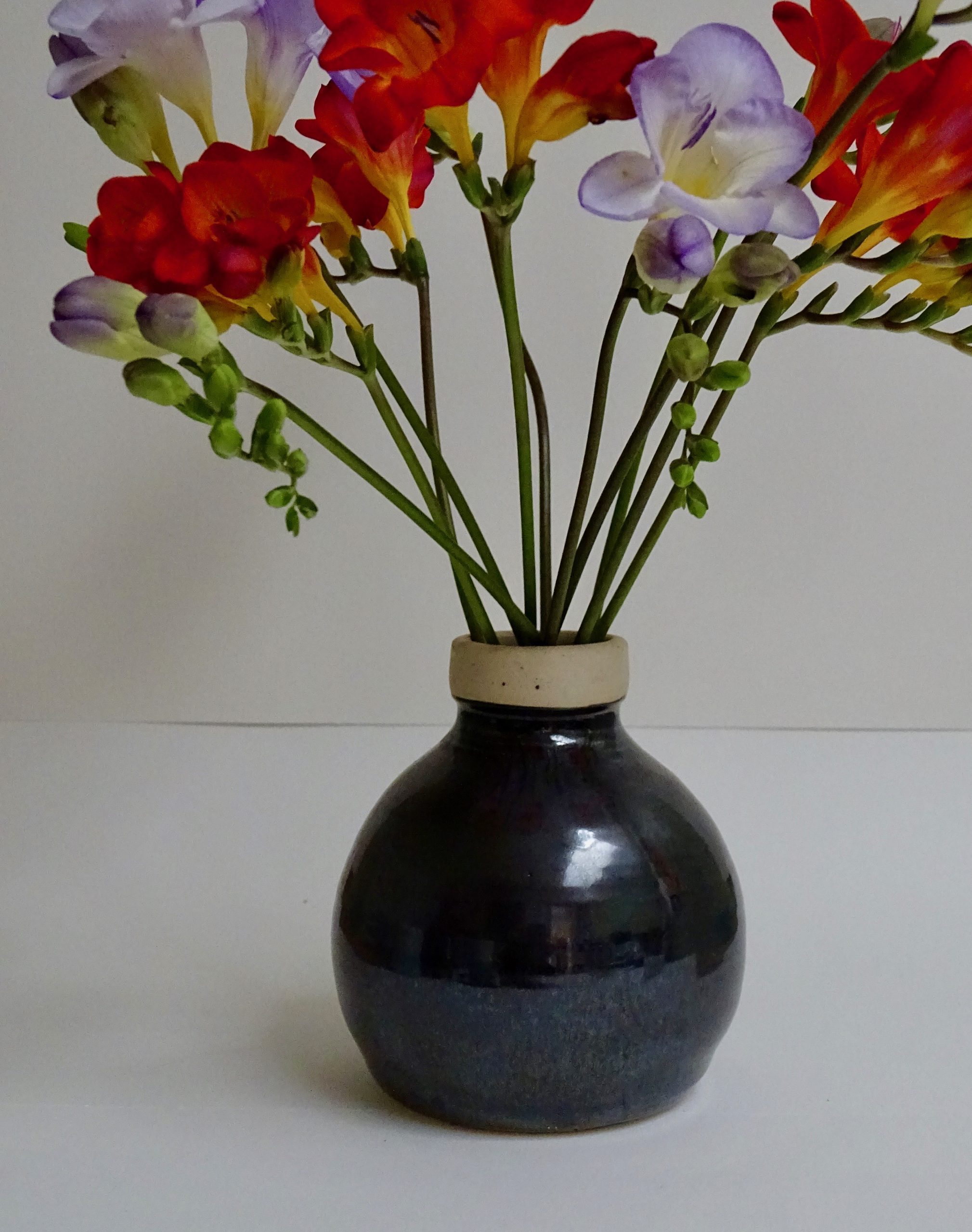
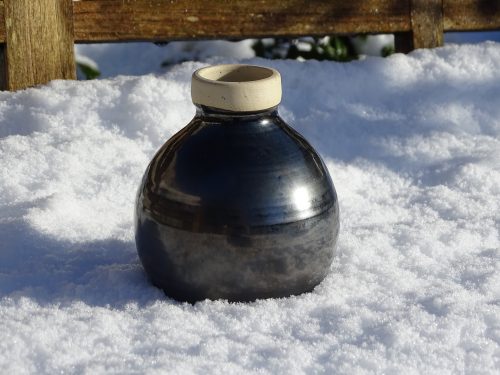
 These stoneware bottles have a high gloss finish which is dark grey in colour.
Fill with water and flowers, or a scented oil and reeds for an oil diffuser.
These stoneware bottles have a high gloss finish which is dark grey in colour.
Fill with water and flowers, or a scented oil and reeds for an oil diffuser.
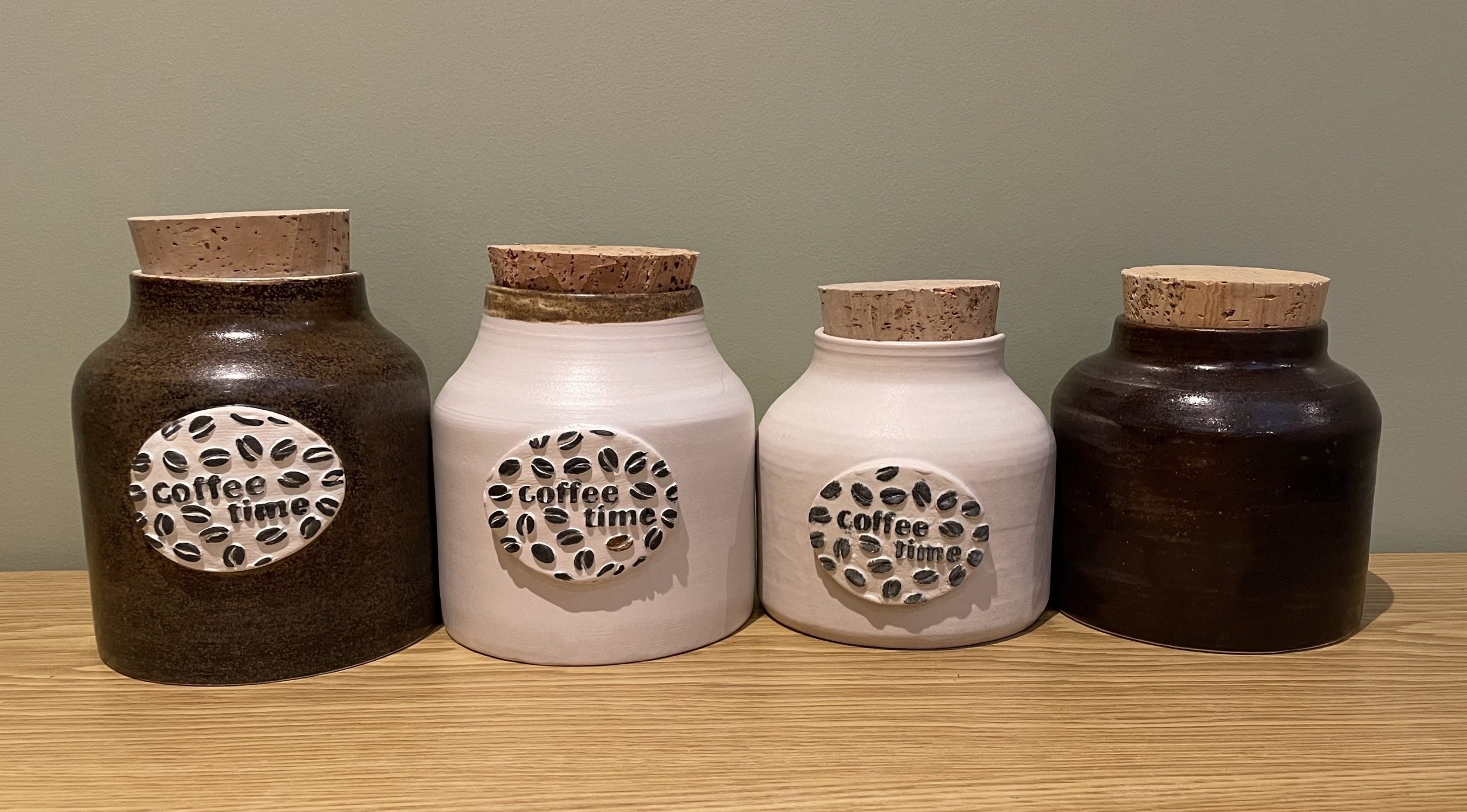
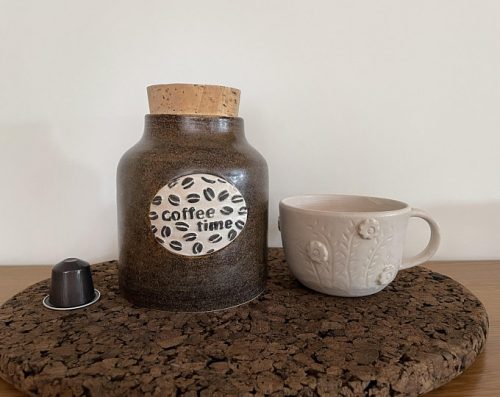 Coffee storage jars made from stoneware clay with cork stopper.
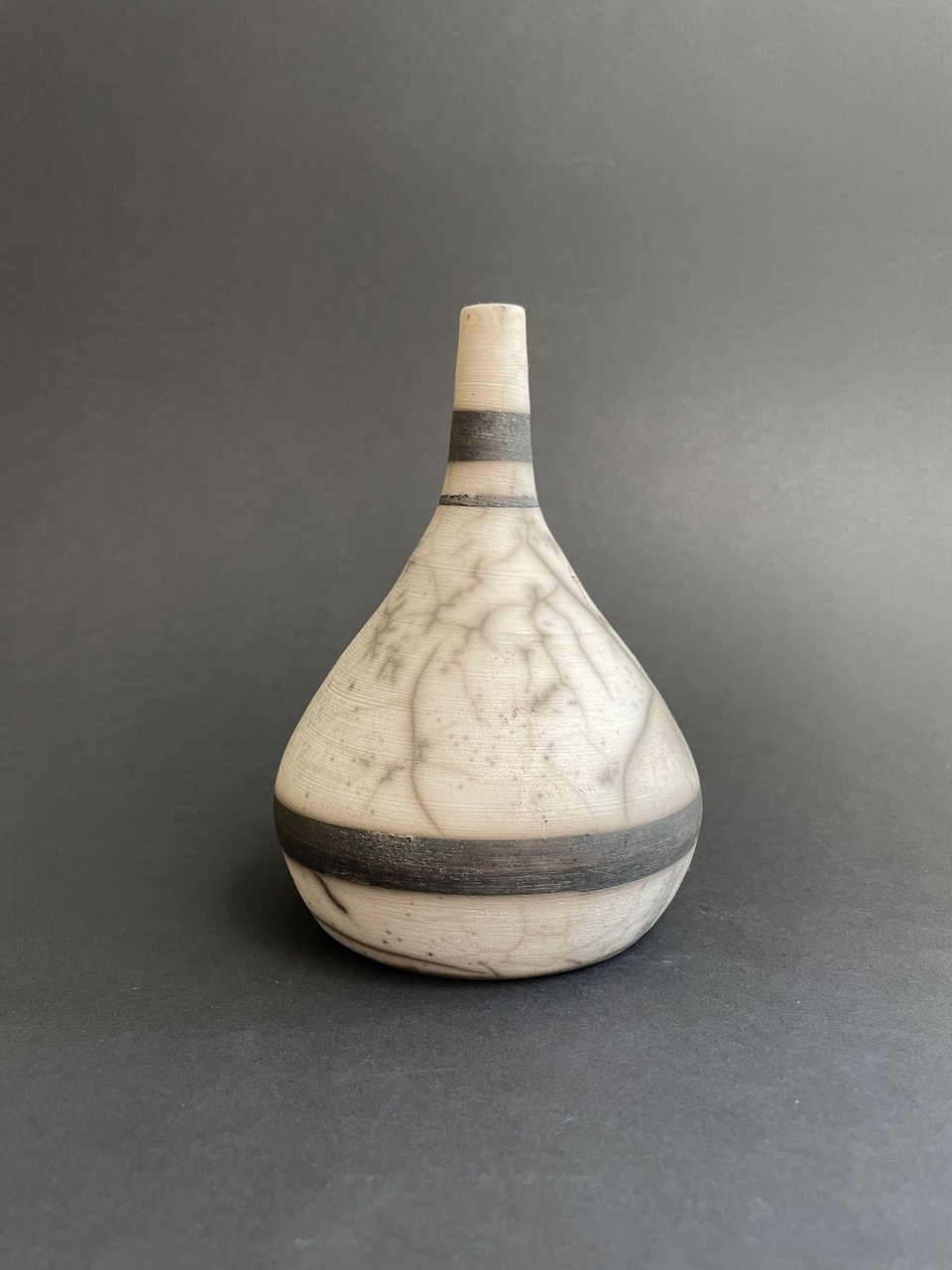
A 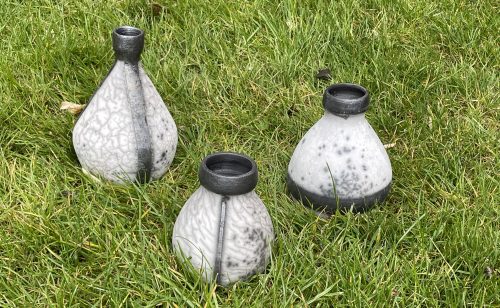 completely unique hand thrown naked raku bottle which makes an excellent gift. These are ornamental pieces as they are porous, and not food safe.
Raku firing produces unique unpredictable, and beautiful effects.
Raku originates in Japan where it was part of the tea ceremony. It was modified in 1950’s America and UK. Once fired pots (biscuit ware) are coated in a slip (liquid clay) and a glaze, heated to around 700-800 degrees C, and, when at this temperature the pots are plunged into a bin of combustible material such as sawdust.
For naked raku, when the pots are removed from the bin, the slip and glaze crackles off, leaving unpredictable patterns. Some people plunge the pots into water to enhance this process. Parts of the pots which have no covering of slip and glaze absorb the smoke and become matt black. The other parts are white with crackles. The pots are then sealed with a special polish.
Each pot is unique and the result of raku firing can be very exciting and beautiful or rather disappointing, and thus pieces tend to be more expensive than regular pottery.
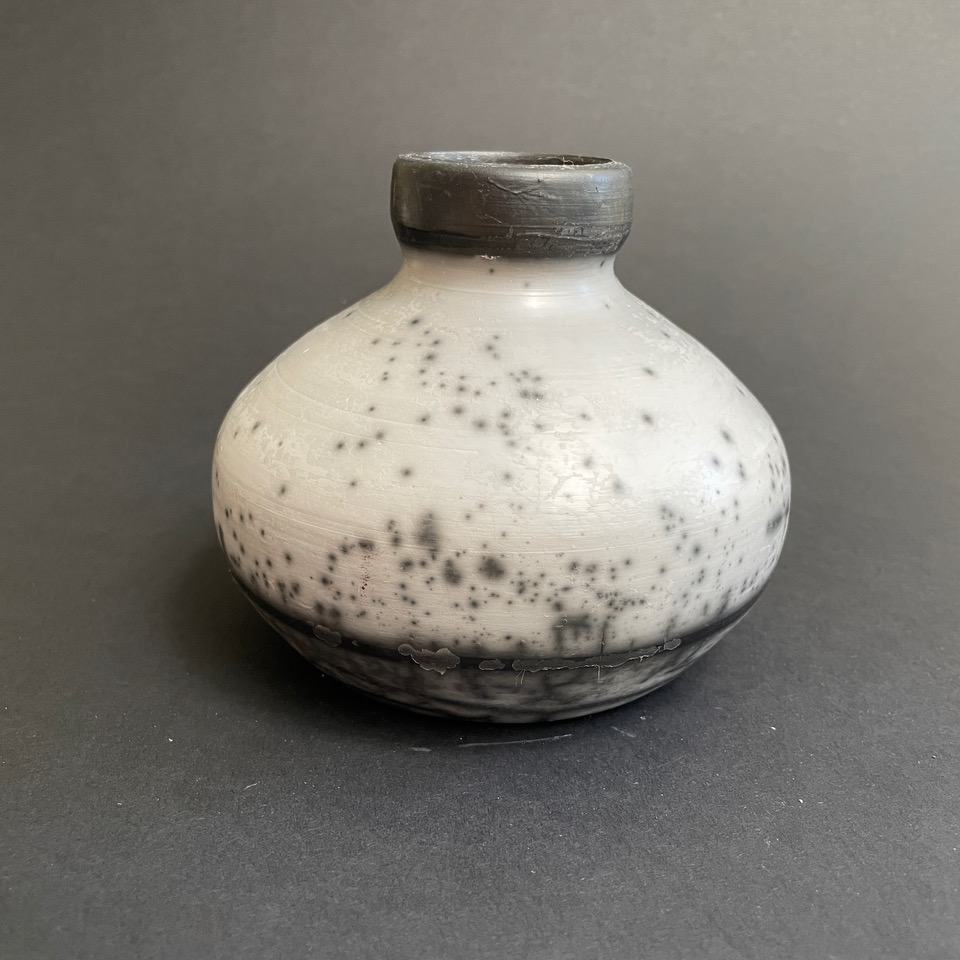
A completely unique hand thrown naked raku bottle which makes an excellent gift. These are ornamental pieces as they are porous, and not food safe.
Raku firing produces unique unpredictable, and beautiful effects.
Raku originates in Japan where it was part of the tea ceremony. It was modified in 1950’s America and UK. Once fired pots (biscuit ware) are coated in a slip (liquid clay) and a glaze, heated to around 700-800 degrees C, and, when at this temperature the pots are plunged into a bin of combustible material such as sawdust.
For naked raku, when the pots are removed from the bin, the slip and glaze crackles off, leaving unpredictable patterns. Some people plunge the pots into water to enhance this process. Parts of the pots which have no covering of slip and glaze absorb the smoke and become matt black. The other parts are white with crackles. The pots are then sealed with a special polish.
Each pot is unique and the result of raku firing can be very exciting and beautiful or rather disappointing, and thus pieces tend to be more expensive than regular pottery.