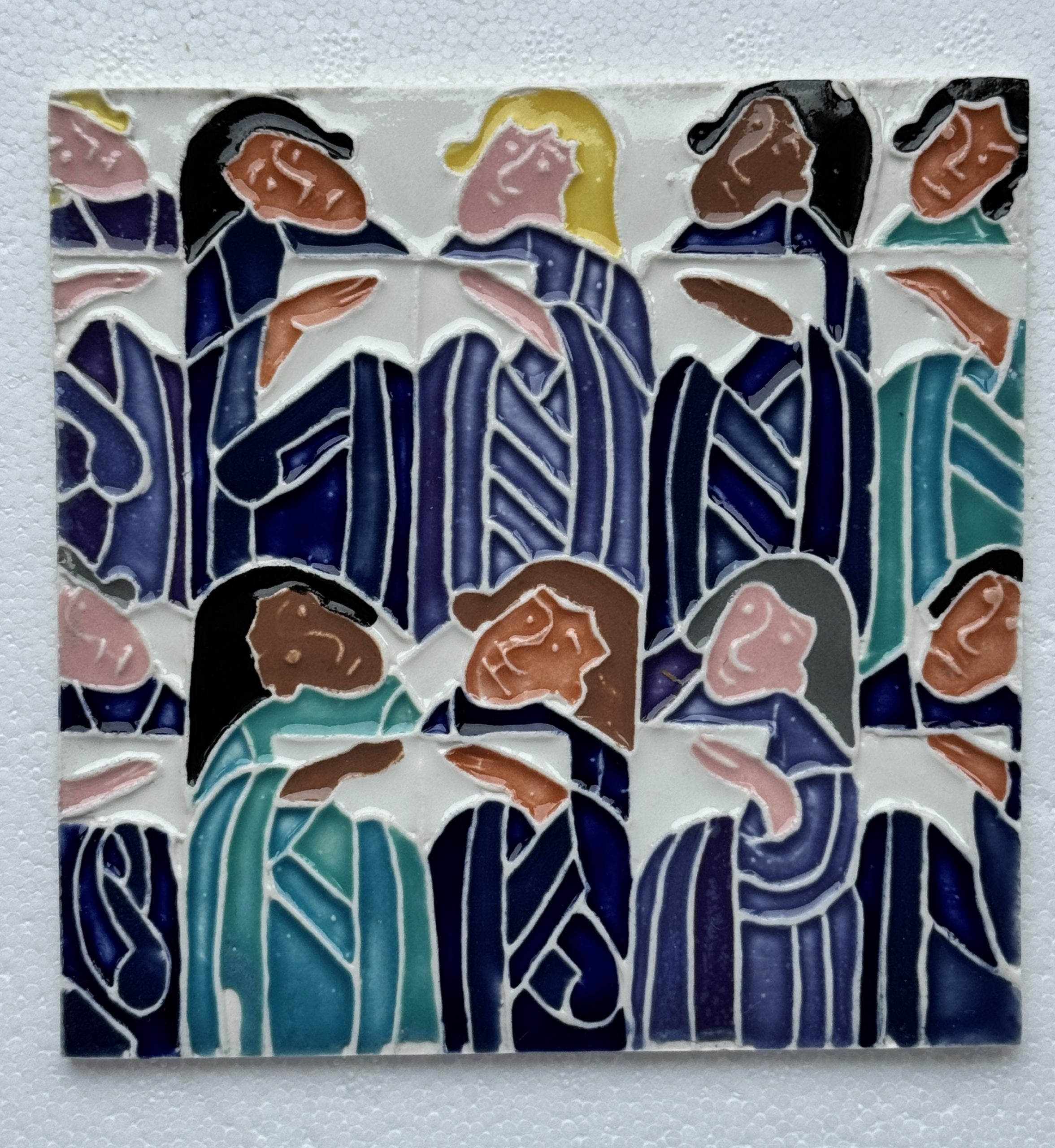
 This unique porcelain tile has been made from a plaster mould, carved by Fiona Wilcock, fired and glazed. It can be mounted in a box frame.
This unique porcelain tile has been made from a plaster mould, carved by Fiona Wilcock, fired and glazed. It can be mounted in a box frame.
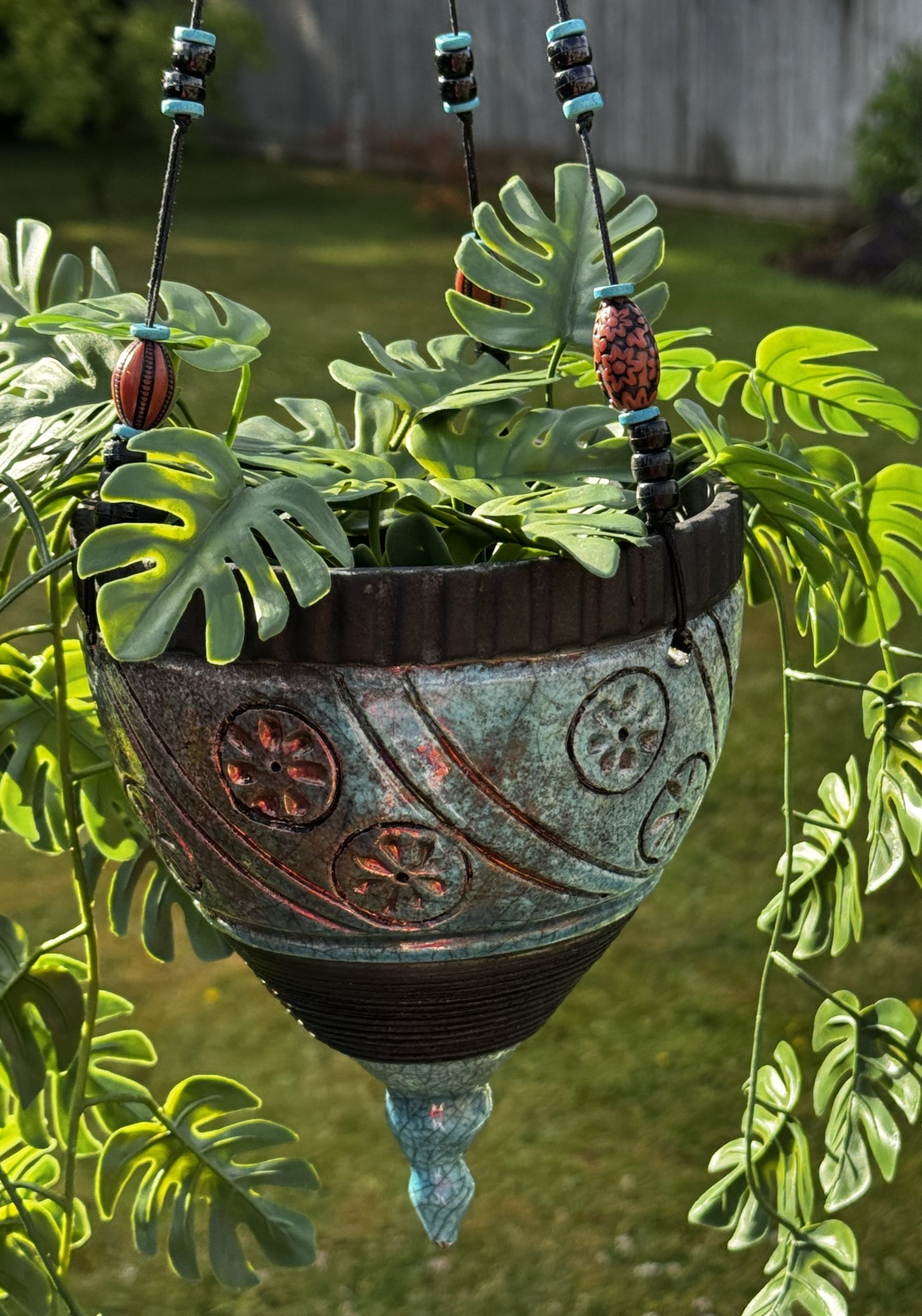
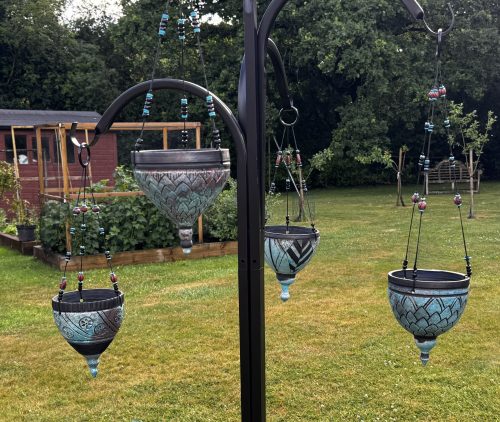
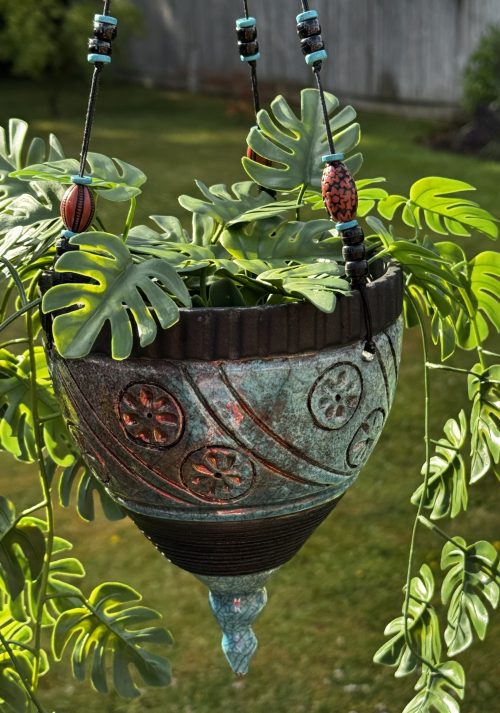
A stoneware raku fired hanging planter. A selection of these is shown. Each is unique, thrown from stoneware clay and raku-fired with a copper based glaze, the planters are handspring with reclaimed beads, and strong threads.
Ideal for conservatories or a summer patio feature.
Raku originates in Japan where it was part of the tea ceremony. It was modified in 1950’s America and UK. Once fired pots (biscuit ware) are coated in glaze, heated to around 800 degrees C, and, when at this temperature the pots are plunged into a bin of combustible material such as sawdust.
Parts of the pots which have no covering of glaze absorb the smoke and become matt black. The pots are then sealed with a special polish.
The glaze on this hanging pot contains copper, which is turquoise but under reduction conditions some may become copper coloured.
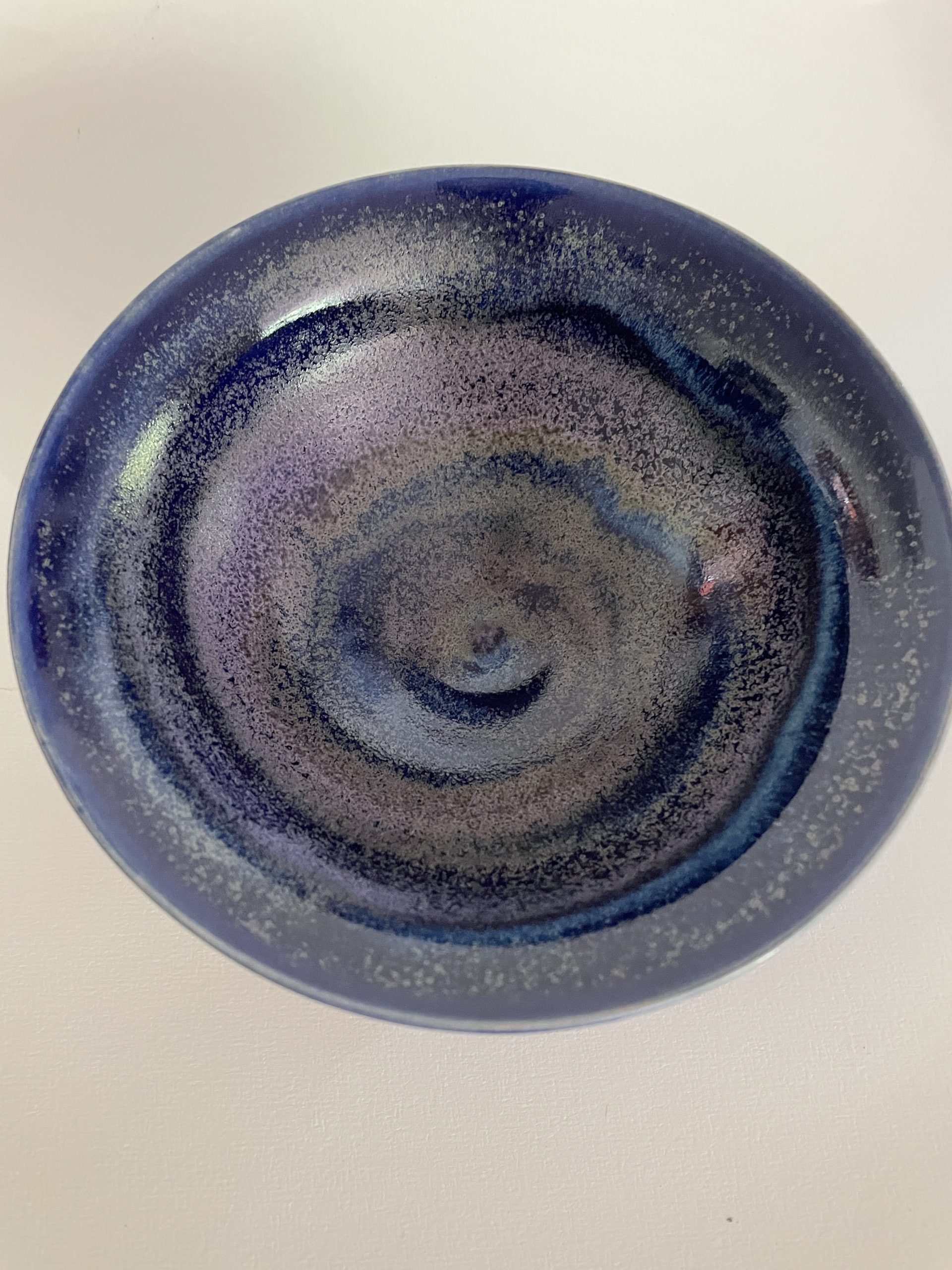
A stoneware bowl with a mixture of reactive glazes, pooling to make a cacophony of colours.
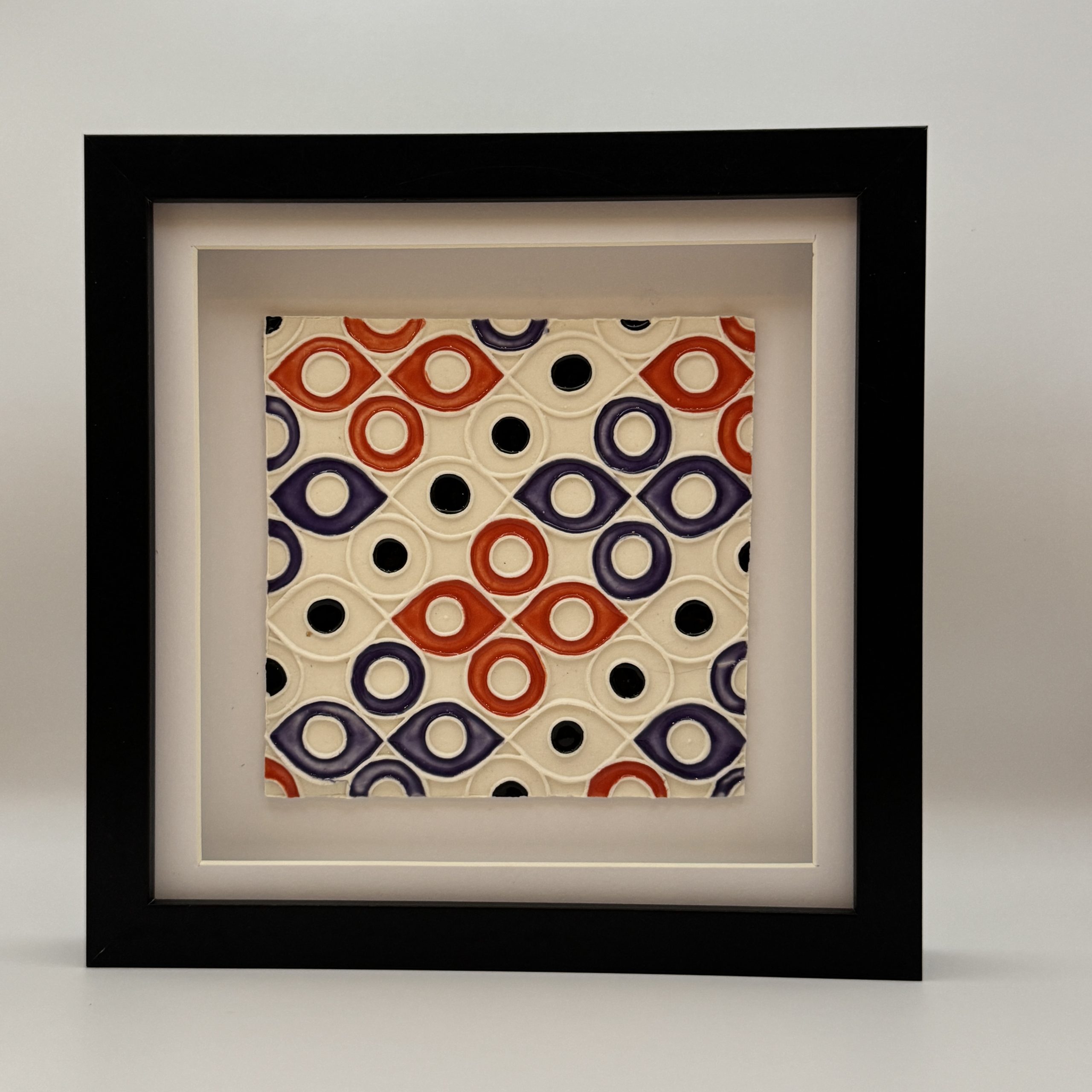
This unique porcelain tile has been made from a plaster mould, carved by Fiona Wilcock, fired and glazed. It is mounted in a box frame to reveal the colours and textures.
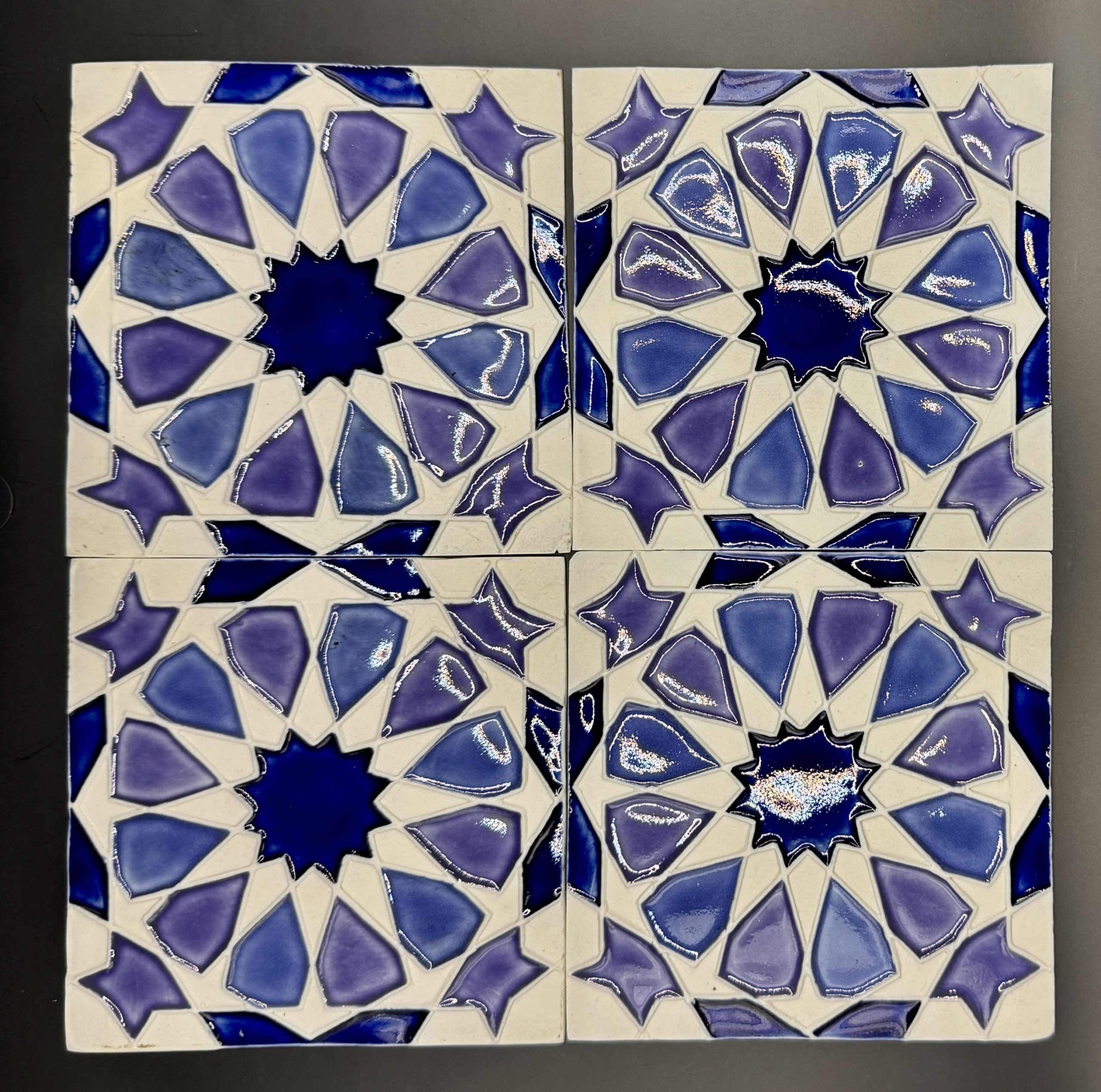
These porcelain tiles are twelvefold rosettes and have been made from a plaster mould, hand carved by Fiona Wilcock. They are then fired and glazed. Available to order. 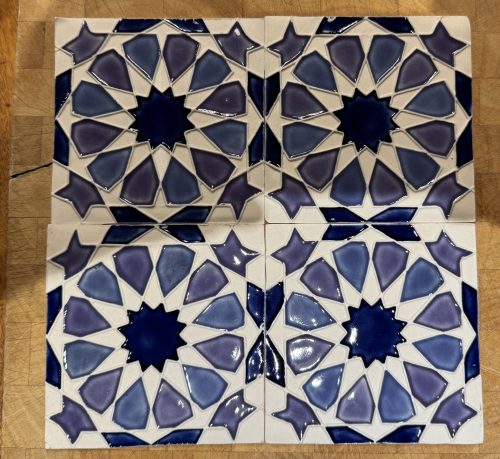
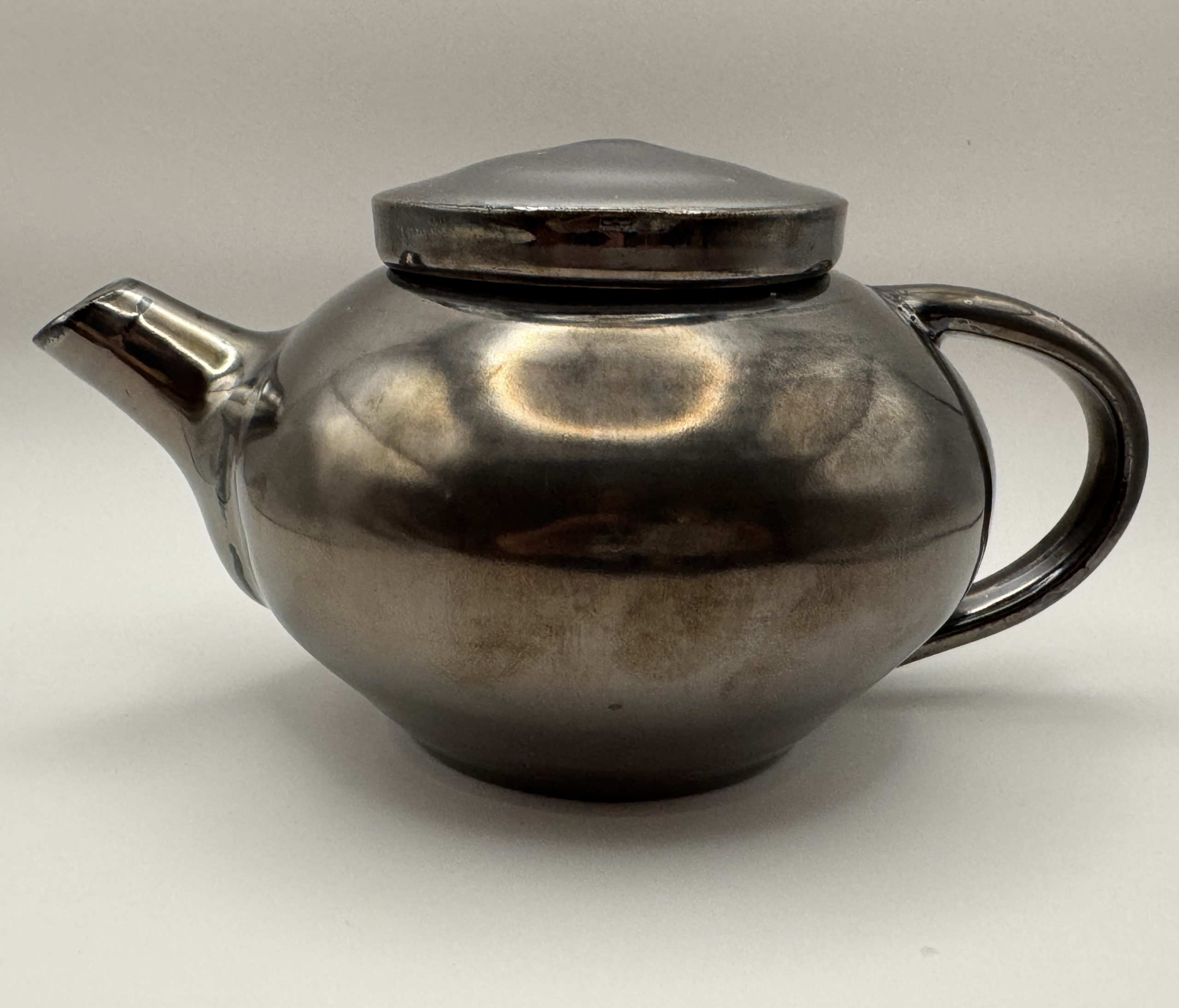
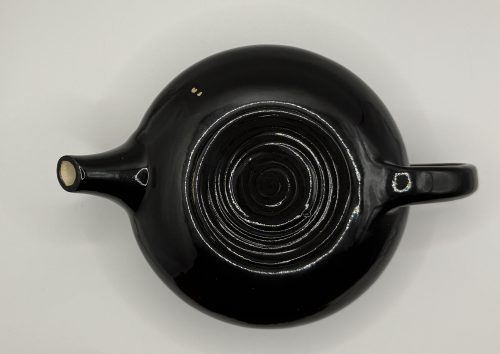
Fabulously glossy pewter black stoneware small teapot.
Stoneware thrown by Fiona Wilcock.
Dishwasher safe.
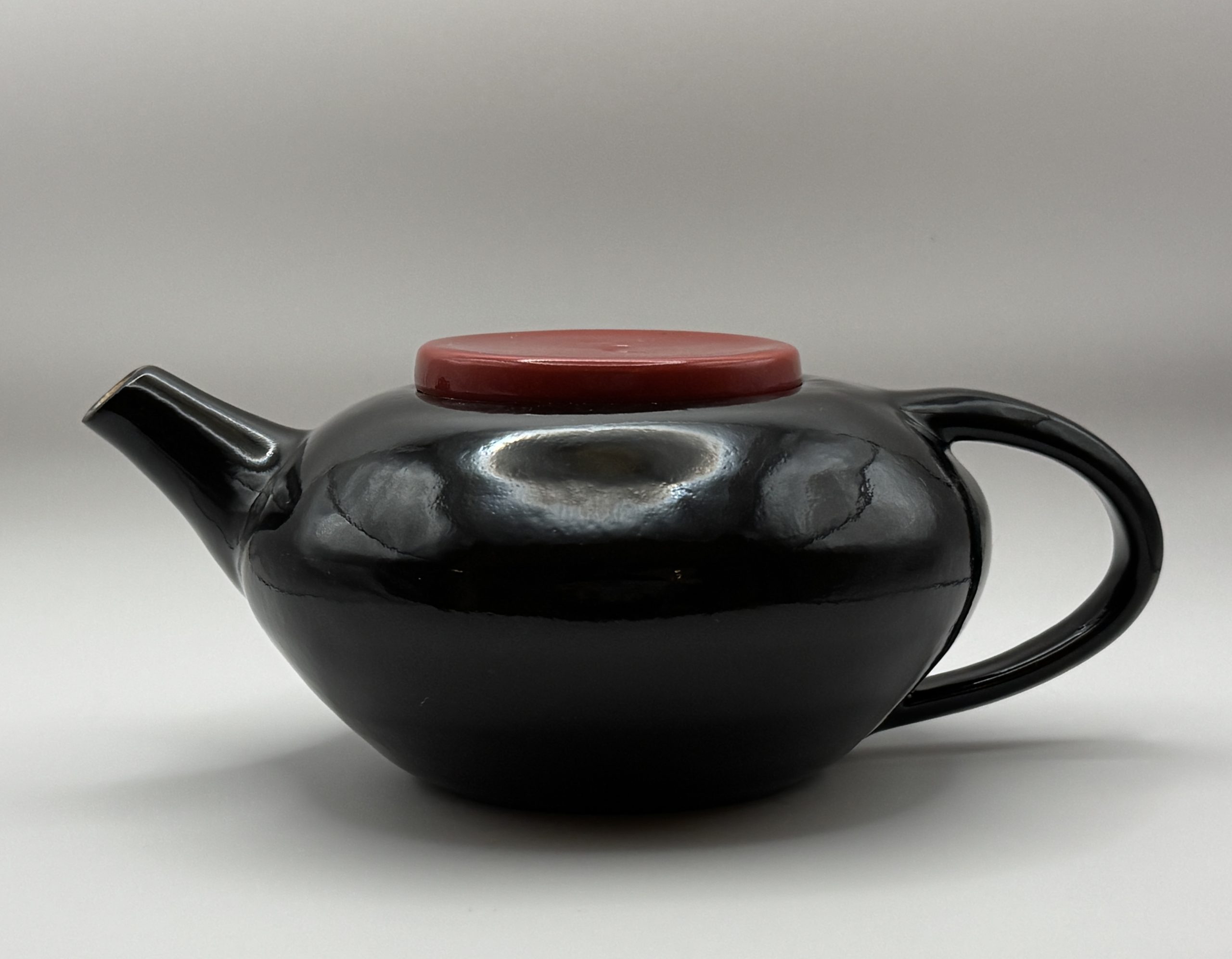
Stoneware teapot with glossy black finish and red lid. Also has a black lid
Dishwasher proof. 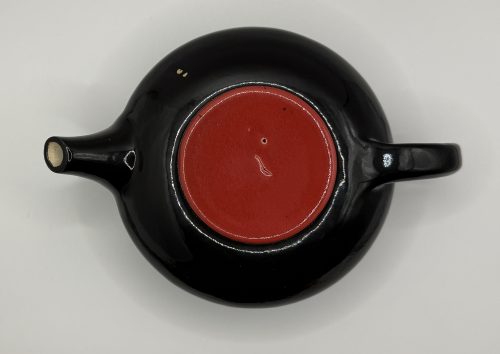
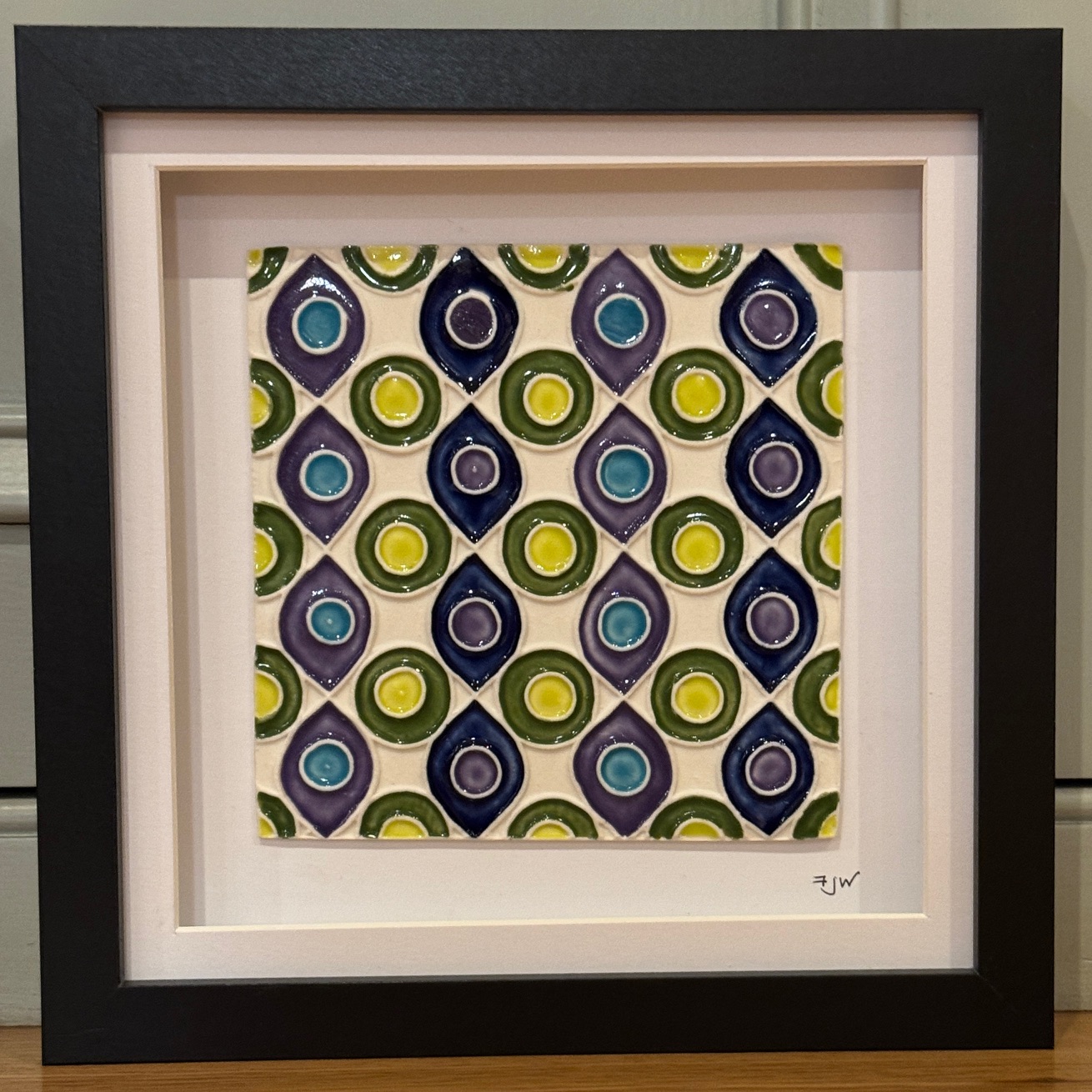
This unique porcelain tile has been made from a plaster mould, carved by Fiona Wilcock, fired and glazed. It is mounted in a box frame to reveal the colours and textures.
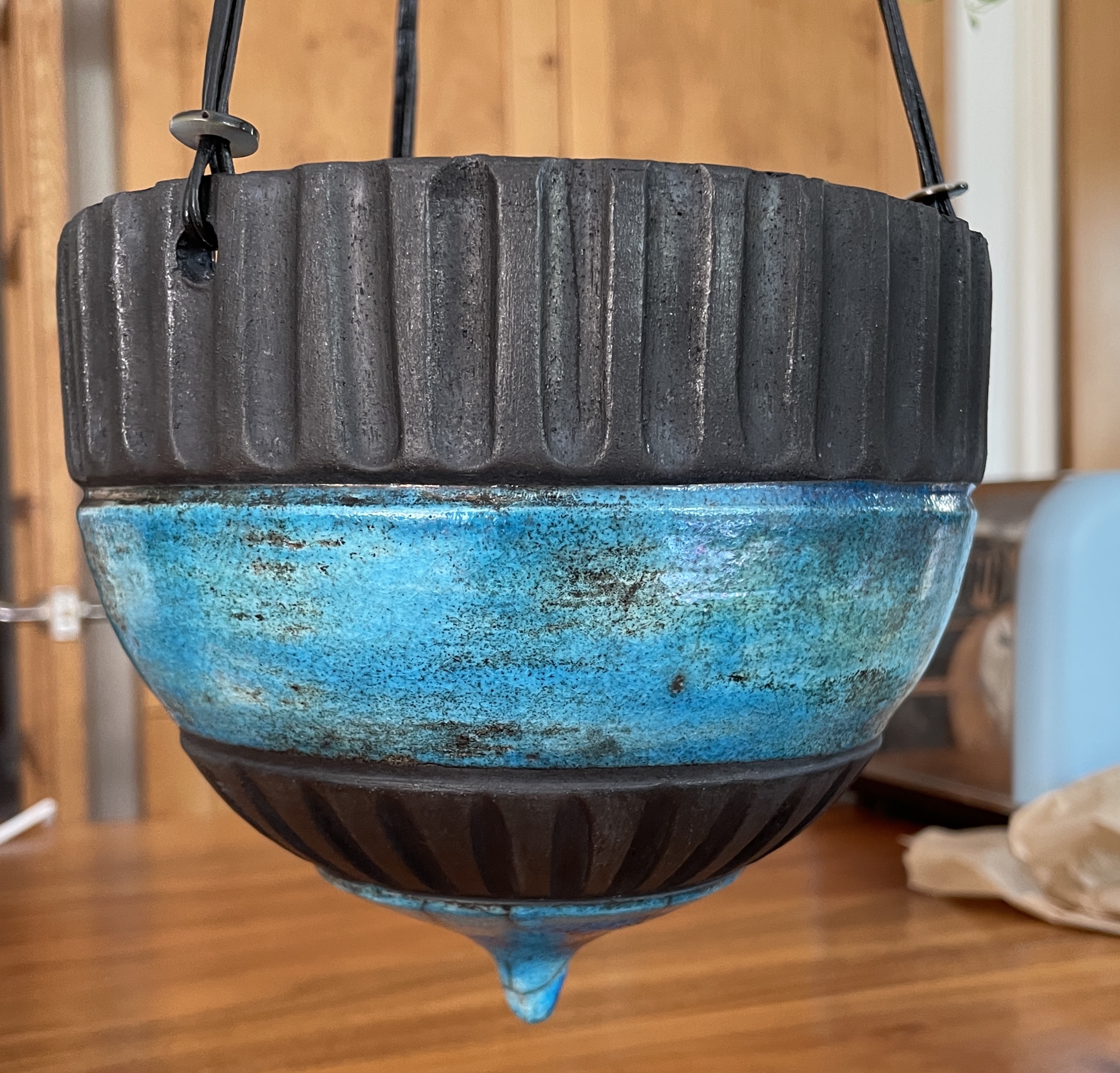
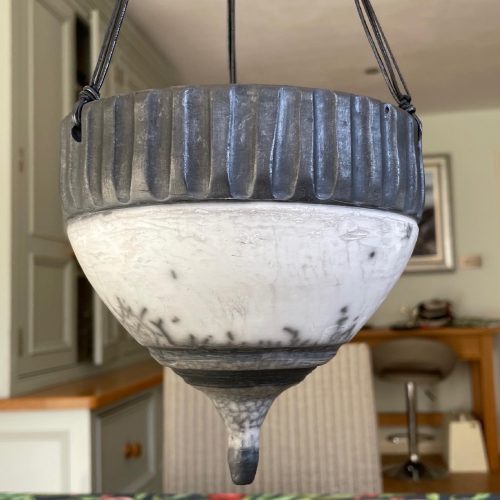
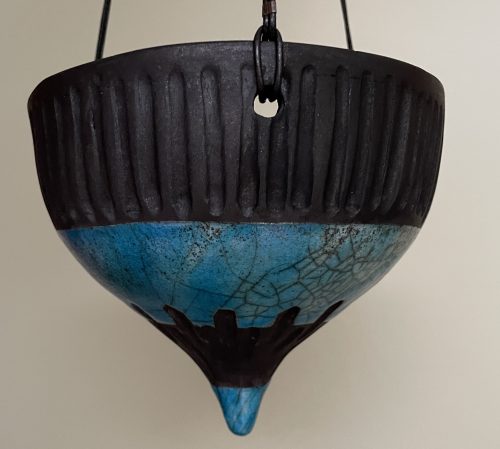 Unique raku planters. Made from stoneware clay and raku-fired with a copper based glaze, this planter is strung with leather thong.
Ideal for conservatories or a summer patio feature.
Raku originates in Japan where it was part of the tea ceremony. It was modified in 1950’s America and UK. Once fired pots (biscuit ware) are coated in glaze, heated to around 800 degrees C, and, when at this temperature the pots are plunged into a bin of combustible material such as sawdust.
Parts of the pots which have no covering of glaze absorb the smoke and become matt black. The pots are then sealed with a special polish.The glaze on this hanging pot contains copper, which is turquoise but under reduction conditions some may become copper coloured.
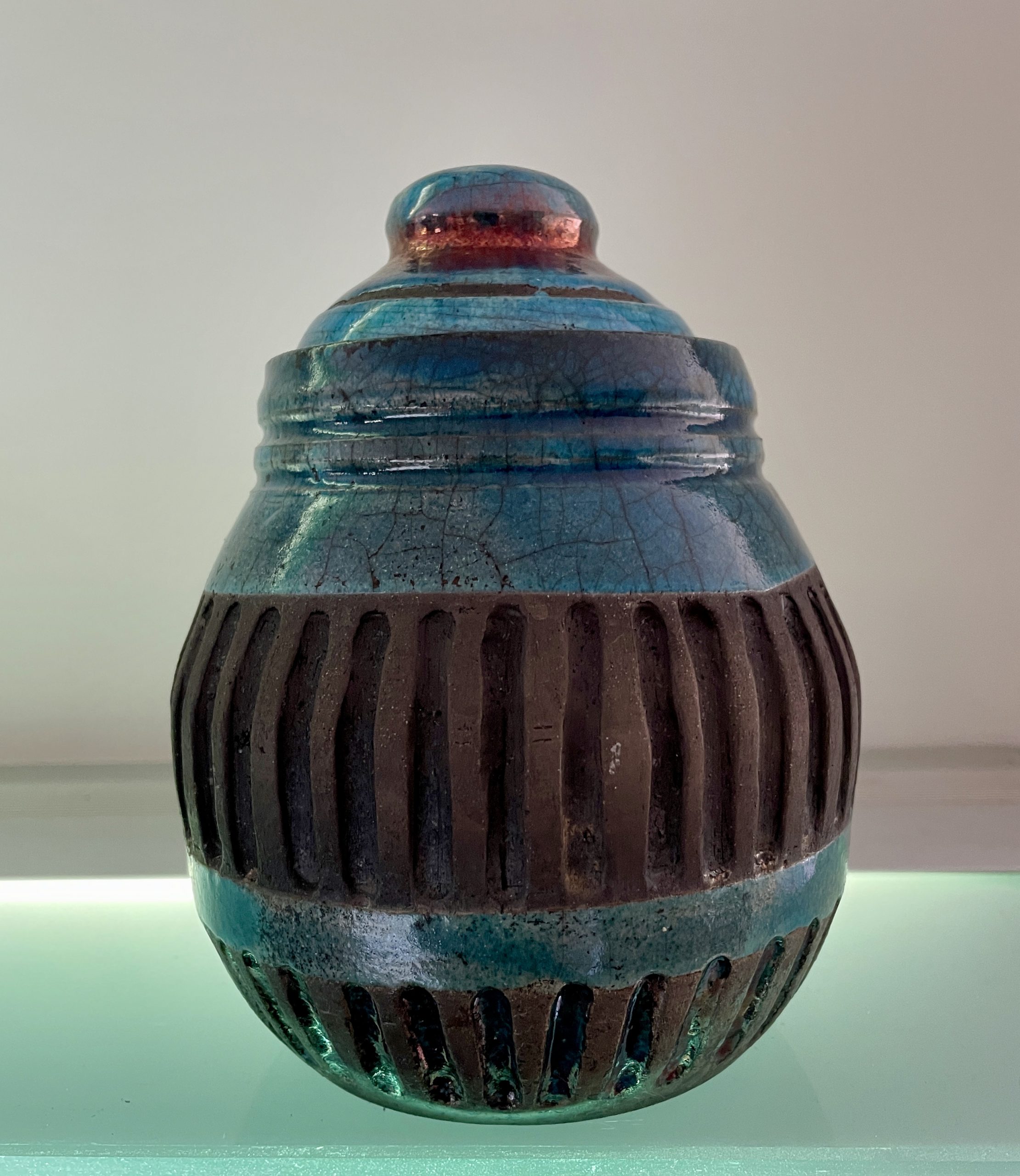
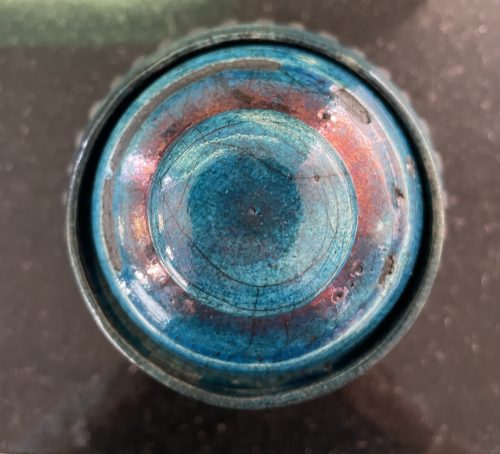 Raku firing produces unique unpredictable, and beautiful effects.
Raku originates in Japan where it was part of the tea ceremony. It was modified in 1950’s America and UK. Once fired pots (biscuit ware) are coated in glaze, heated to around 800 degrees C, and, when at this temperature the pots are plunged into a bin of combustible material such as sawdust.
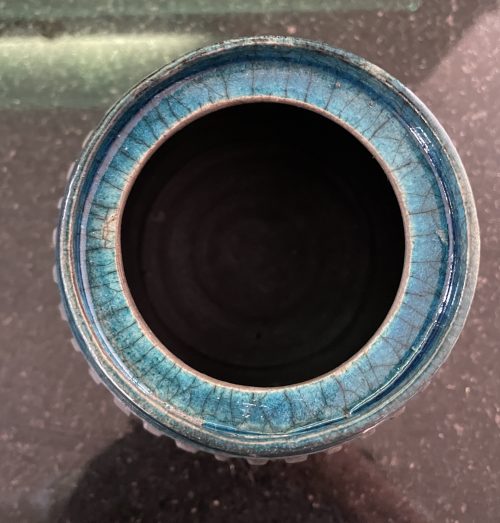
Parts of the pots which have no covering of glaze absorb the smoke and become matt black. The pots are then sealed with a special polish.The glaze on this pot contains copper, which is turquoise
but under reduction conditions some may become copper coloured.